Inflatable Bunkers for Laser Tag: How to Build a Flexible Arena Anywhere
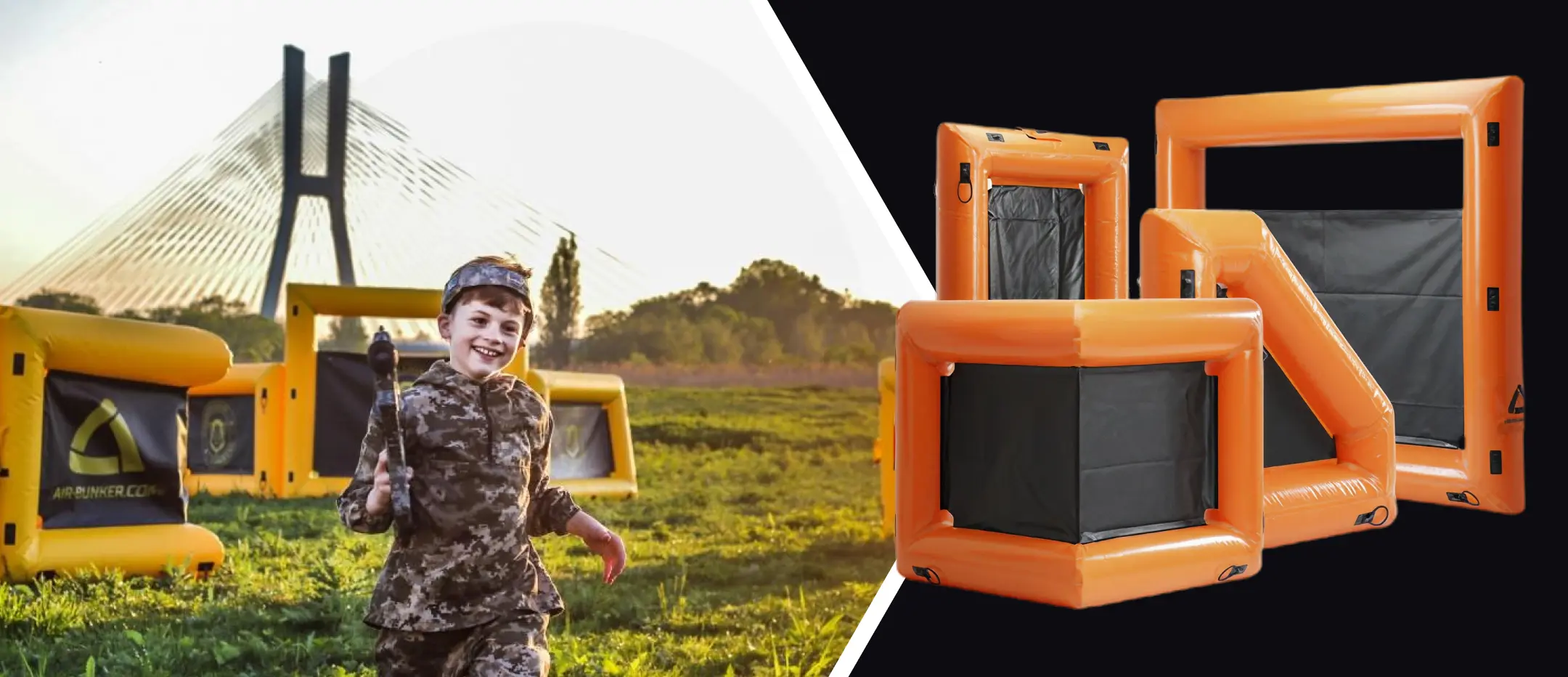
Inflatable bunkers are a practical part of a laser tag business, not a decorative extra. They help turn open space into a working game zone fast, and that matters when the service model depends on speed, mobility, and repeatable setup.
For operators, the real value is simple. A field that is easy to build is easier to sell. A field that is easy to move is easier to scale. That is why inflatable bunkers should be viewed as part of the commercial toolkit, not just as a visual element.
Why inflatable bunkers matter for business
A laser tag operator rarely works with a single permanent format. Events change, venues change, player numbers change. In that context, inflatable bunkers provide structure to the game without locking the business into a single location.
They are useful for corporate events, schools, camps, outdoor entertainment zones, and temporary game sites. They also support a stronger product presentation. When the buyer sees a complete field concept, the offer becomes clearer and easier to justify.
That is where inflatable arena setup starts to matter. It gives the operator a repeatable way to organize space and deliver the service on demand. It also makes the equipment package look more professional to a client.
Halim Behroz, Business Development Representative (Europe & Middle East) at NETRONIC, observed: “Mobile laser tag with inflatable bunkers is no longer just a set of products. It is a full business model. It lowers the entry barrier, expands the range of possible venues, and helps operators monetize each equipment package more effectively.”
AIRBUNKER as a field tool
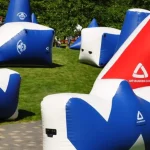
AIRBUNKER serves as a field-building element for commercial laser tag operations. It helps define cover, shape movement, and keep the game readable for players and staff.
In practice, this matters because a business needs more than just hardware. It needs portable arena solutions that can be deployed without complex preparation. AIRBUNKER fits that need well, especially when the operator wants to run events in different locations.
The same logic applies to sales. When the equipment package includes bunkers and player gear, the offer becomes easier to position as a complete service. That is stronger than selling isolated items one by one.
What the system solves
The value of inflatable bunkers is practical, not abstract.
- They create tactical cover.
- They help control player movement.
- They make the battlefield easier to read.
- They reduce dependence on fixed infrastructure.
- They support faster event launch.
This is especially important for teams that handle mobile events. A field that sets up quickly and works in different locations has direct commercial value. It gives the operator more booking flexibility and less operational friction.
That is why many businesses treat this format as part of a broader modular arena design. The layout can change, but the operating logic stays the same.
Setup logic in real use
A good arena must be simple to deploy. If setup becomes a problem, the business loses time, energy, and margin. That is why the setup process should stay lean and predictable.
A standard inflatable arena setup usually includes space selection, bunker placement, lane planning, and checking the balance between cover and open lines. Nothing excessive. Just enough structure to keep the game clean and easy to run.
This model works well for temporary events and recurring bookings. It also helps staff prepare the field without unnecessary delays. In commercial terms, that means less downtime and more paid game time.
Indoor and outdoor formats
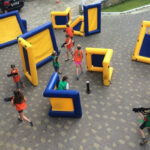
Inflatable solutions are flexible because they work in different environments. Indoors, they help organize compact spaces and make the most of limited square meters. Outdoors, they create a field that can be launched in parks, fields, event grounds, or other temporary spaces.
That is why outdoor arena equipment and indoor portable arena solutions should be treated as part of a single system. The operator can adjust the field for the venue without changing the basic service model.
This flexibility is especially useful for businesses that serve different customer segments. The same equipment can support a children’s event, a corporate game, or a seasonal outdoor program. That makes the investment easier to justify.
Mobile laser tag as a business model
Mobile laser tag is not just a format. It is a business model built around movement, speed, and service packaging. AIRBUNKER supports this model by making the field itself portable.
When the operator can move the game to the client, the venue is no longer a fixed limitation. That opens the door to more contracts and more locations. It also makes the offer easier to explain to clients who want a turnkey solution rather than a one-time product purchase.
In this context, inflatable obstacle course setup is a useful reference point. The same operational principle applies: build fast, run the event, pack down, move on. The difference is that laser tag adds the tactical layer and the equipment ecosystem around it.
Halim Behroz remarked: “For mobile laser tag, inflatable bunkers are not a decorative add-on. They are a working tool that helps operators quickly build a playable field, adapt it to different locations, and keep the game structure clear. That is exactly why this format works so well in a commercial setting: the operator gets flexibility, and the client gets a ready-made game experience.”
How to position the offer
If the goal is to sell laser tag equipment, the field elements should be presented as part of a revenue tool. The customer is not buying air-filled shapes. The customer is buying a working format that supports events, bookings, and service delivery.
That is why the phrase laser tag arena setup matters commercially. It describes the real outcome the client wants. Not objects. A working field. Not storage volume. A service asset.
The strongest sales message is straightforward: the right bunker system helps turn a kit of equipment into a ready-to-run business. And that is easier to sell.
Comparison by use case
| Use case | Main benefit | Business effect |
| Mobile events | Fast relocation and repeatable deployment | More bookings across different venues |
| Indoor games | Efficient use of limited space | Better fit for halls and gyms |
| Outdoor events | Flexible temporary layout | Easier seasonal expansion |
| Commercial packages | Complete field + gear solution | Stronger sales offer |
This structure helps the buyer understand where the product works best. It also makes the business case more concrete. That is usually what closes the deal.
Choosing the right solution
A buyer should focus on how well the system supports operations, not just how it looks in a photo.
- Check whether the field can be built quickly.
- Review how well it fits indoor and outdoor formats.
- Confirm whether the layout supports repeated use.
- Consider storage and transport.
- Look at whether the package supports a commercial launch.
For operators, the right choice is one that reduces friction. For sales teams, the right choice is one that is easy to present and easy to bundle with equipment. That is where modular thinking becomes useful.
Halim Behroz added: “When a business sells laser tag as a service, the field design matters just as much as the equipment itself. AIRBUNKER enables the creation of a controlled arena without a major investment in permanent infrastructure. That is a strong fit for mobile events, temporary setups, and locations where fast deployment is a priority.”
Inflatable bunkers are not the main product, but they make the main product work better. They support field flexibility, faster setup, and a stronger commercial offer.
For LASERTAG.NET, that means one clear positioning: AIRBUNKER is part of a business-ready solution, not just a field accessory.
FAQ
What is the main purpose of inflatable bunkers in laser tag?
They create cover and structure for the game, helping turn open space into a functional field.
Is AIRBUNKER suitable for mobile laser tag?
Yes. It supports quick deployment and makes the game easy to move from one venue to another.
Can inflatable bunkers be used indoors?
Yes. They work well in halls, gyms, warehouses, and other indoor venues where the field needs to be organized.
Why are these solutions good for equipment sales?
Because they help present laser tag as a complete business system rather than a set of separate items.
Is mobile laser tag with AIRBUNKER a ready business format?
Yes. It combines portable equipment, field structure, and event delivery into one service model.